
Good Parenting Is Like Good Coaching
- Grace K

- May 4
- 5 min read
Published by Grace K | Conscious Capital
Many parents think they need to have all the answers.
They feel pressure to raise successful, well-behaved, confident children — while also managing work, home, school, and life. It’s a lot.
But maybe parenting does not need to feel like constant correction.
Maybe it helps to think of parenting in a different way: Good parenting is a lot like good coaching.
A good coach does not just tell people what to do. They help them grow. They encourage, guide, challenge, and support. They help people become stronger, not just more obedient.
And that is exactly what children need from parents too.
What Good Coaching Looks Like at Home
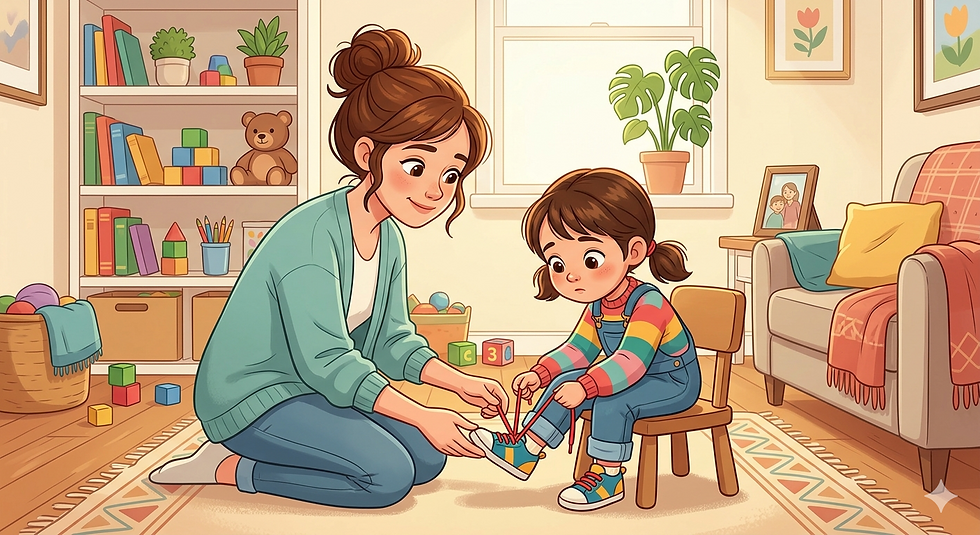
1. Help Children Do Hard Things
It is natural to want to protect your child from discomfort. But not every struggle is harmful.
Sometimes, children need to try, fail, feel frustrated, and try again. That is how they build confidence.
For example:
tying their own shoes
speaking up for themselves
finishing homework without giving up
learning how to deal with disappointment
As a parent, your job is not to remove every challenge.
Your job is to remind them: “This is hard, but you can do hard things.”
2. Praise Effort, Not Just Results
Many children grow up thinking they are only “good enough” when they win, score highly, or do everything perfectly.
But that kind of thinking can create pressure and fear.
Instead of only praising outcomes, praise:
hard work
patience
consistency
bravery
improvement
For example, instead of saying: “Great job getting an A.”
You can say: “I’m proud of how much effort you put into that.”
This teaches children that effort matters, not just the final result.
3. Create the Right Environment for Focus
Children do better when the environment supports them.
If home feels loud, rushed, stressful, or full of distractions, focus becomes harder.
Parents can help by creating simple routines:
regular bedtime
quiet homework time
limits on screens
time for rest and play
calm instructions instead of constant shouting
Focus is not just about discipline.
Sometimes it is about creating the right conditions.
4. Encourage Curiosity, Not Fear
Children learn best when they feel safe enough to ask questions, make mistakes, and try again.
But if they are afraid of being judged, shouted at, or punished every time they get something wrong, they may stop trying.
Curiosity sounds like:
“What happened?”
“What did you learn?”
“How can we do better next time?”
Fear sounds like:
“What is wrong with you?”
“Why can’t you get this right?”
“Don’t embarrass me.”
Children who are raised with curiosity often grow into adults who can think for themselves and solve problems better.
5. Keep Learning as a Parent
No parent gets everything right.
But good parents stay open to learning.
That means understanding:
what is normal for a child’s age
how children express stress
how emotions affect behavior
how to correct without shaming
Parenting is not about pretending to know it all.
It is about being willing to grow too.
6. Leave Your Ego Out of It
Sometimes children’s behavior can feel personal.
A child talks back in public. They refuse to listen. They embarrass you in front of others.
In those moments, many parents react from anger or pride.
But good parenting is not about “winning” against your child.
It is about asking: “What does my child need to learn in this moment?”
Sometimes the best response is not the loudest one.
Sometimes it is calm, firm, and thoughtful.
7. Focus on the Person, Not Just the Behavior
Yes, behavior matters.
But parenting is bigger than getting your child to “behave.”
It is about helping them become:
respectful
responsible
resilient
kind
honest
confident
If a child lies, the goal is not only to punish the lie.
It is to teach honesty, trust, and accountability.
That is the bigger picture.
8. Push With Love
Children need love. But they also need standards.
Being loving does not mean saying yes to everything.
Sometimes love means:
holding boundaries
expecting effort
saying no
making them finish what they started
not letting them quit too early
But children respond better when they know that correction comes from care, not anger.
They need to feel: “My parent believes in me, even when they are pushing me.”
Why This Matters to Parents
This approach to parenting can have a big impact.
If children are overprotected:
They may grow up unable to cope with stress or setbacks.
If children are only praised for results:
They may become afraid of failure or feel they are never enough.
If children are raised in fear:
They may hide mistakes instead of learning from them.
If parents only focus on behavior:
They may miss the deeper emotional needs behind it.
But when parents coach their children well, children are more likely to become:
stronger emotionally
more confident
more responsible
better at handling challenges
more secure in who they are
That matters in school, friendships, work, and life.
What Parents Can Start Doing Right Away
1. Change how you praise
Instead of only celebrating results, start noticing effort.
Say:
“I saw how hard you worked on that.”
“You didn’t give up.”
“That took courage.”
2. Pause before reacting
Before shouting or punishing, ask:
What is really going on here?
Is my child struggling, tired, overwhelmed, or frustrated?
What do they need to learn right now?
3. Let your child struggle a little
Do not rush in too quickly.
Support them, but let them try.
Confidence grows when children do hard things for themselves.
4. Build a calmer home rhythm
Simple routines help a lot.
Try:
set bedtimes
fewer distractions during homework
less screen time before sleep
regular one-on-one conversations
5. Be firm, but kind
Children need boundaries.
But they also need to know they are loved, even when corrected.
You can be strong without being harsh.
Good parenting is not about being perfect.
It is about being the kind of parent who helps a child grow.
That means:
helping them face hard things
praising effort
creating focus
encouraging curiosity
learning as you go
staying calm
teaching character
pushing with love
Children do not need parents who control every step.
They need parents who guide them, support them, and prepare them for real life.
When parents think like good coaches, they stop asking only: “How do I make my child listen?”
And start asking: “How do I help my child grow?”
That shift changes everything.
Because the real goal of parenting is not just a well-behaved child.
It is a strong, thoughtful, capable human being.


Comments